
Background
Retail investors and finance creators make sense of the market through social feeds. On any given day, Reddit, X and Bluesky carry thousands of posts about listed stocks, and a single ticker can go from quiet to everywhere in a few hours.
From the outside, all of that attention sounds the same. A genuine wave of interest and a coordinated push read alike in a feed, and existing tools only score the mood: positive or negative, bullish or bearish.
What was missing was a way to tell whether the attention itself is real.
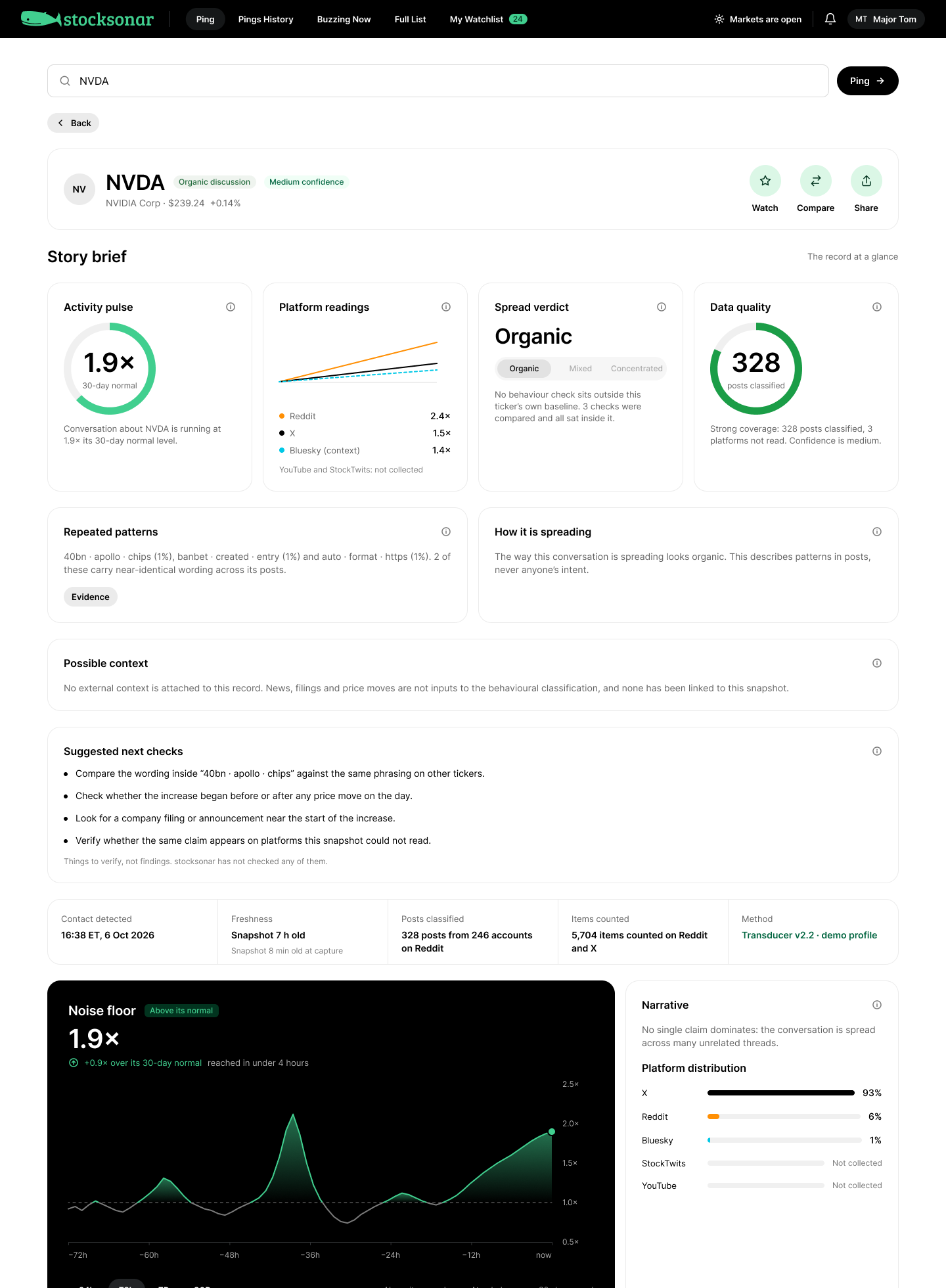
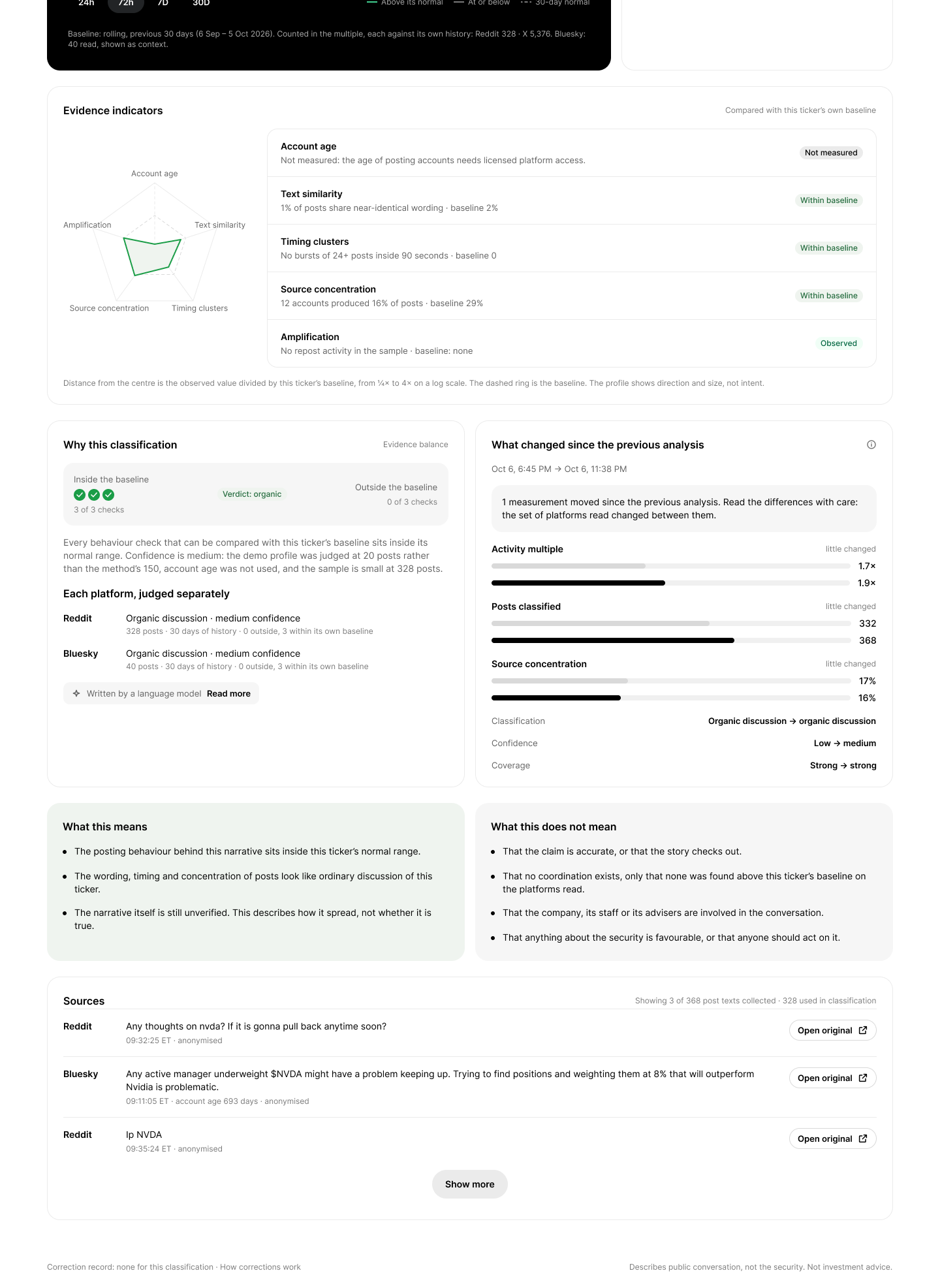
stocksonar fills this gap. It is an attention-classification engine for listed equities: it shows what is being said about a ticker, which narrative the posts are repeating, and whether that attention looks organic or coordinated, measured against the ticker’s own 30-day normal.
My Role
stocksonar is my own product. As founder and product designer, I led it end to end: discovery research, product strategy, brand identity, UX/UI, the design system and every marketing asset.
I used Gen AI tools heavily throughout, from building the classification engine and the static demo with Claude Code, to Figma design tokens that feed straight into code, to the landing page, ad set, daily X posts and the launch video.
Our Objective
Our primary goal was to turn social attention into something measurable and inspectable — a classification you can cite, not a call you have to trust.
Strategically, the product was designed to:
Make attention measurable against each ticker’s own normal
Separate organic discussion from coordinated activity
Make every classification inspectable
Build a waitlist of finance creators ahead of launch
Research
Before designing a single screen, I ran a discovery sweep over 45 days of public posts from six equity subreddits. On a typical day, submissions named about 90 distinct symbols, and with comments counted the conversation named roughly 470. The conversation also moved fast: tickers that dominated one month were nearly silent the next, so a fixed watch list would have measured the wrong stocks. That finding shaped the core of the product: baselines have to follow the conversation, and a spike only means something against that ticker’s own history.
In parallel, I mapped the competitive landscape: sentiment engines, investing newsletters and several products already using the “Sonar” name. Every one of them either makes a call or scores a mood. That gave stocksonar its position: it only describes and cites, and its brand had to be recognisable even without the name.
Key Assumptions
Creators need an angle they can cite, not a stock pick.
A spike only means something against the ticker’s own normal.
Authenticity, not sentiment, is the missing signal.
Showing sources and confidence builds more trust than a single score.
Refusing to classify on thin evidence is a feature, not a gap.
Working Process
Insight Analysis
My initial research into how finance creators work pointed to one recurring problem: they publish on a deadline, and the angle has to hold up. Yet they had no reliable way to tell whether a sudden surge was real before sharing it.
We identified key friction points:
- No baseline: a busy day and a manufactured one look the same
- A single sentiment score hides how the conversation actually spread
- Claims cannot be checked: no sources, timing or confidence travel with them
Information Architecture
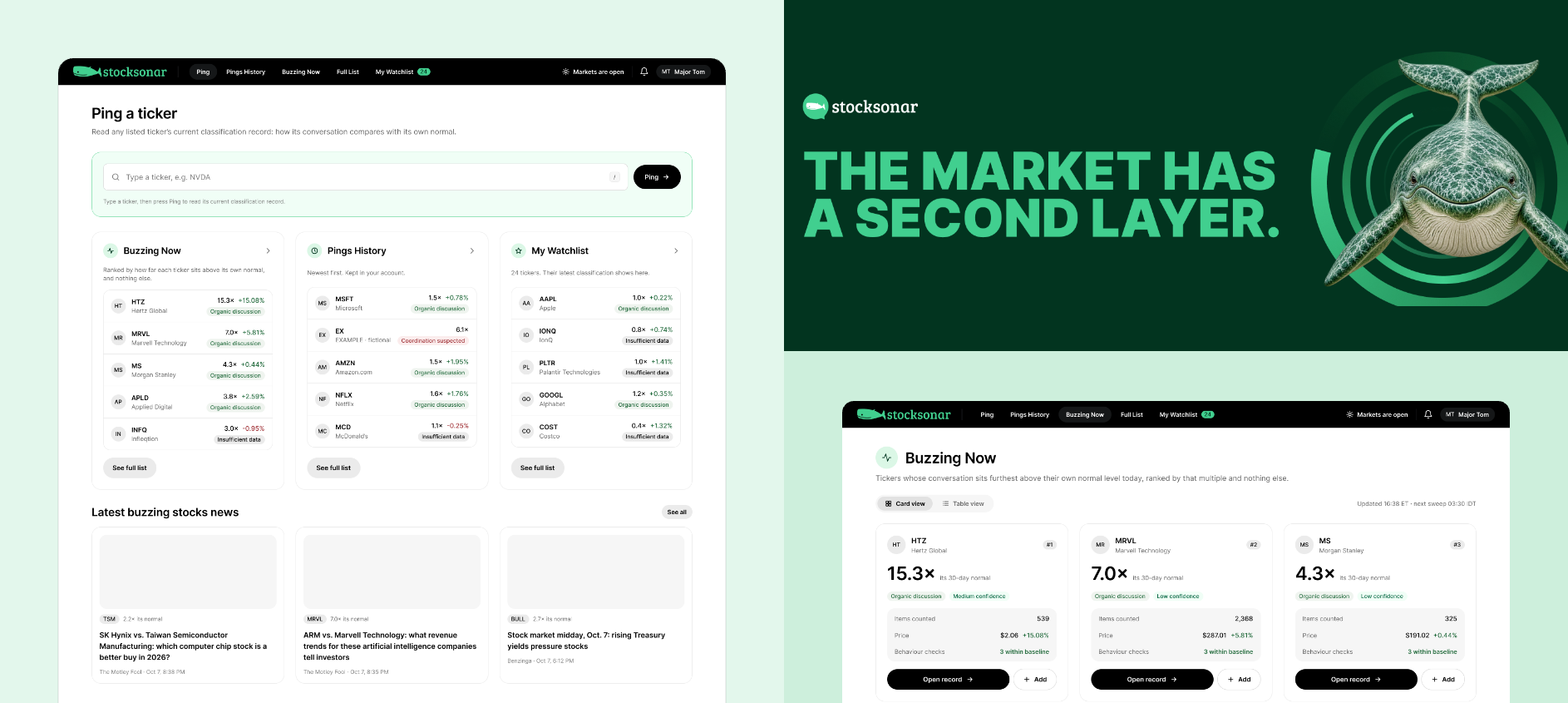
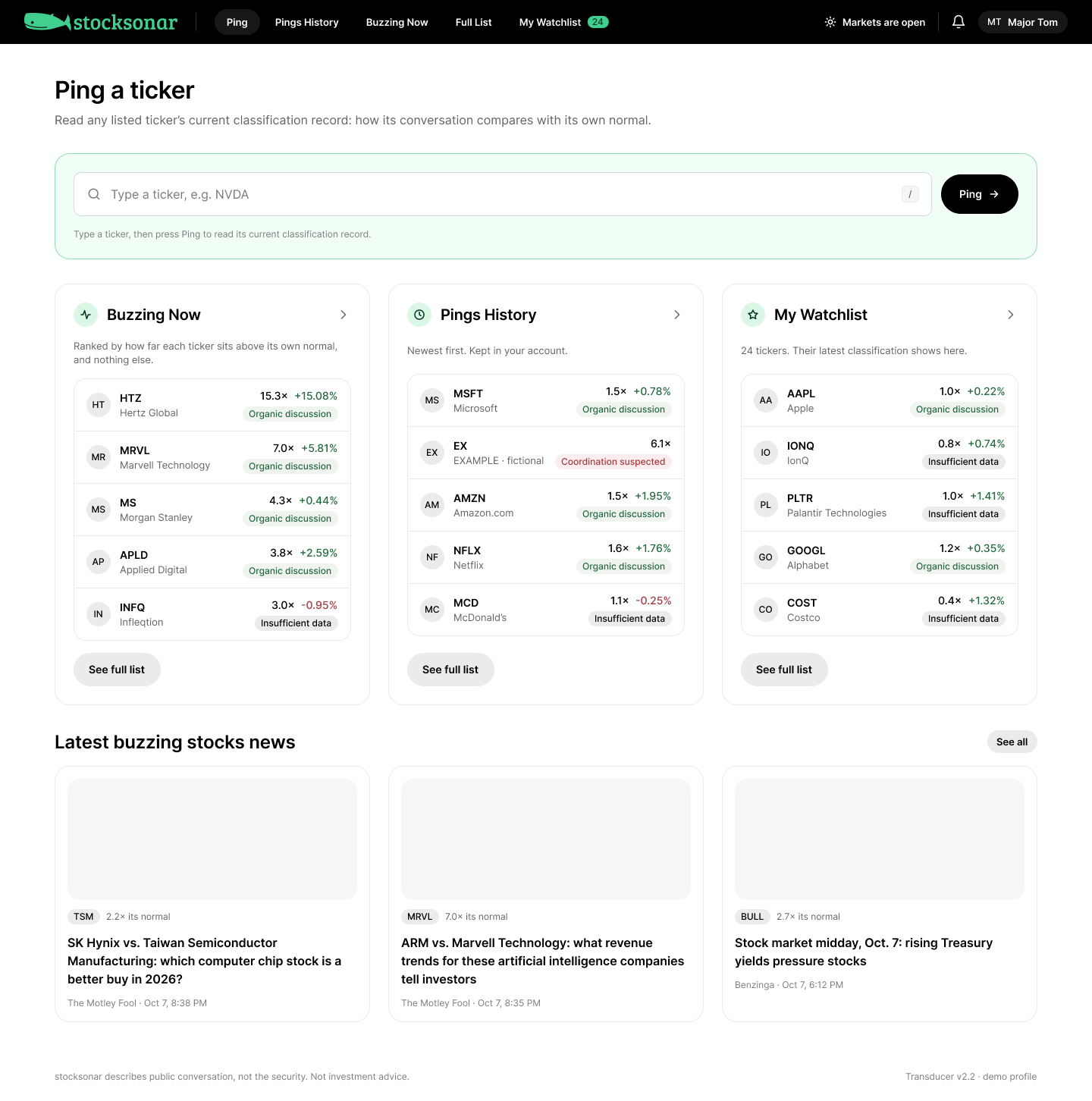
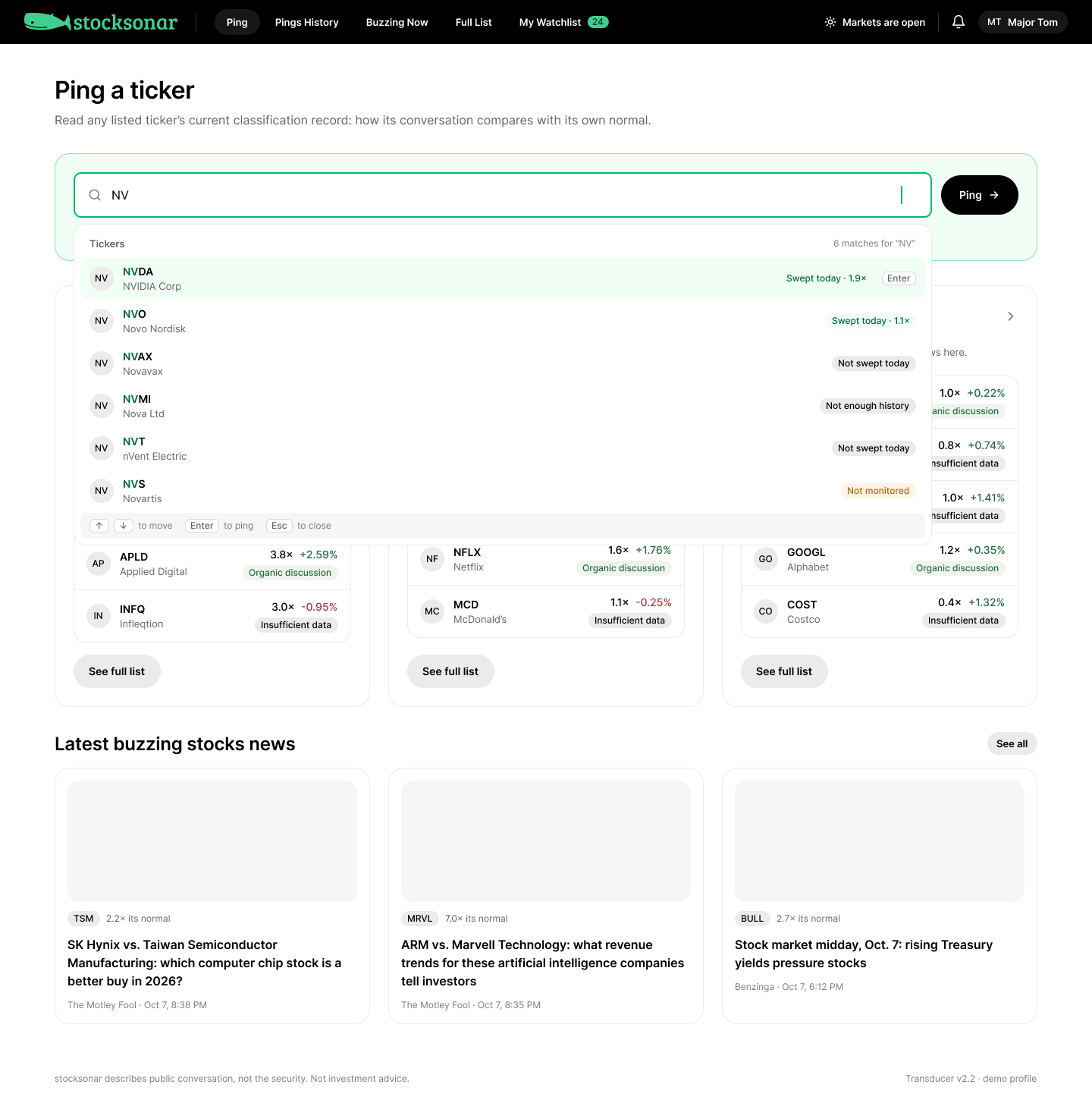
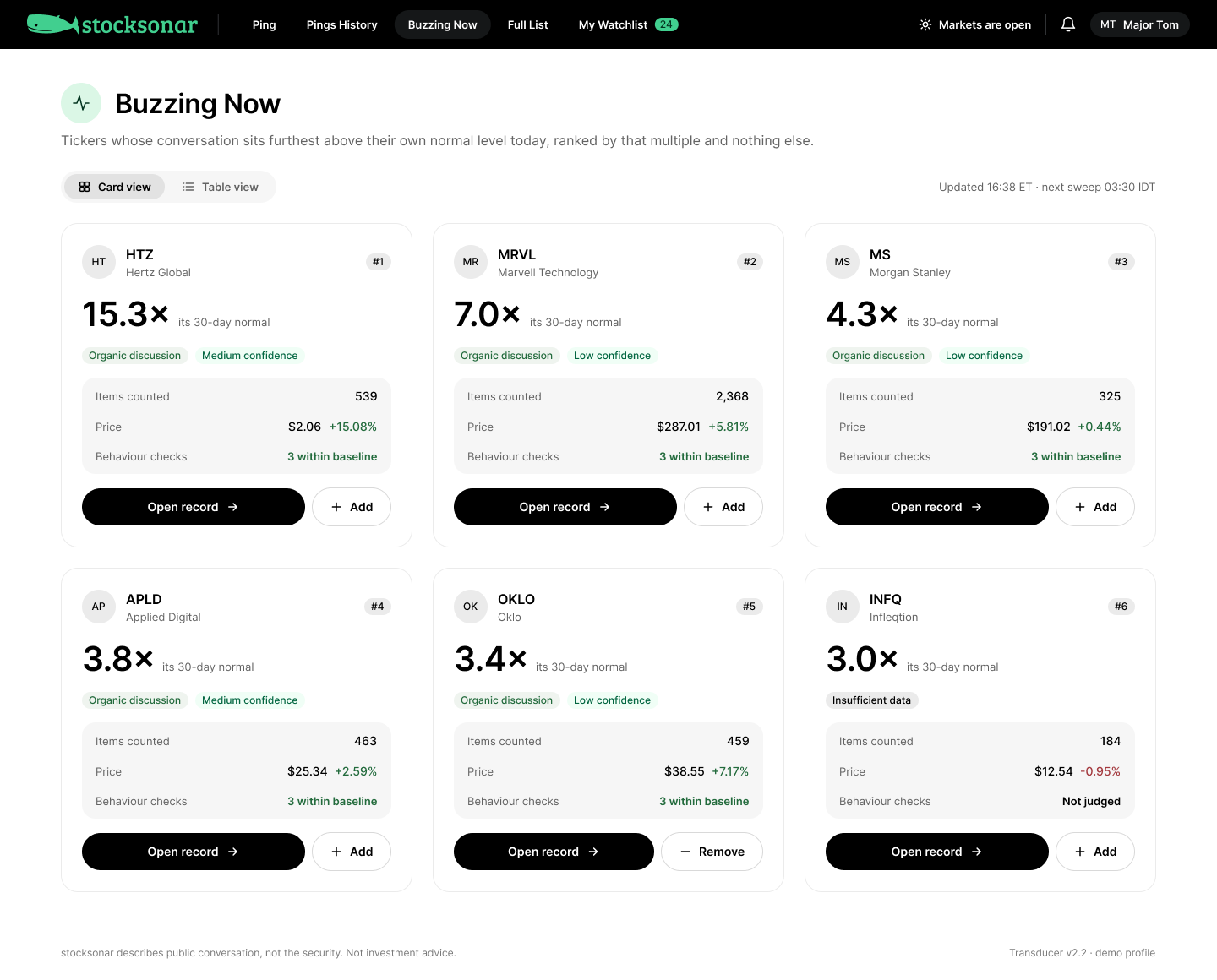
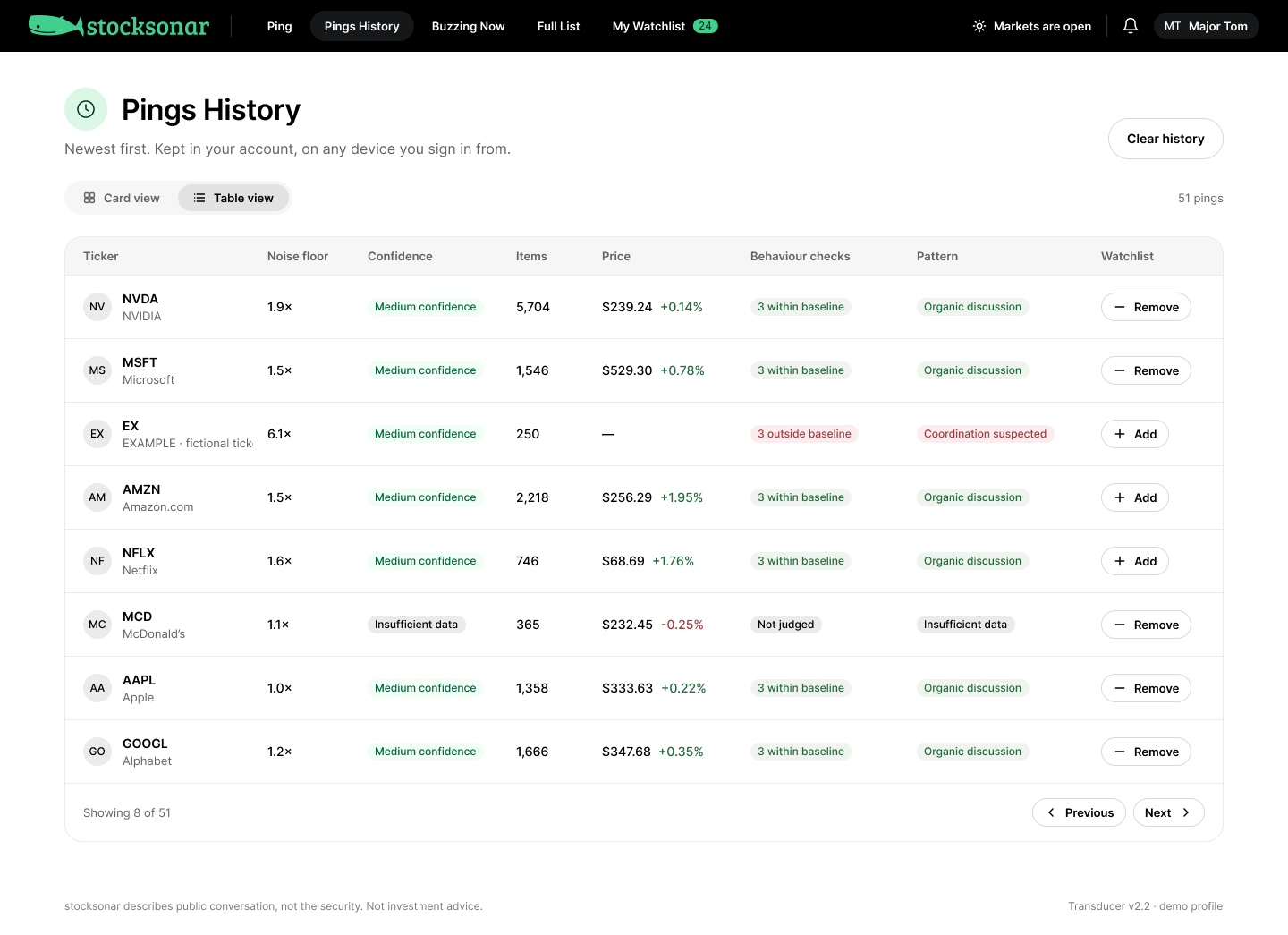
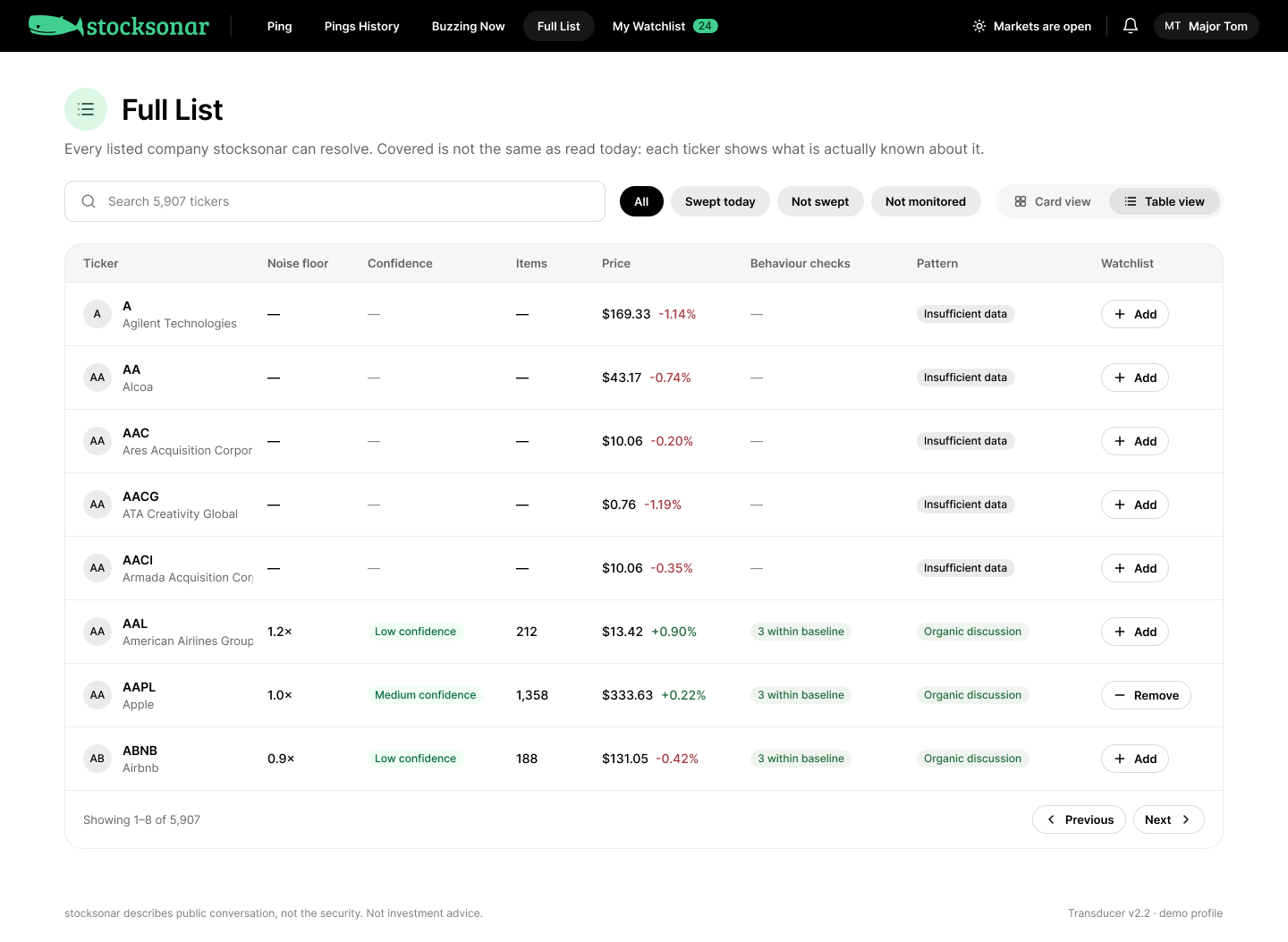
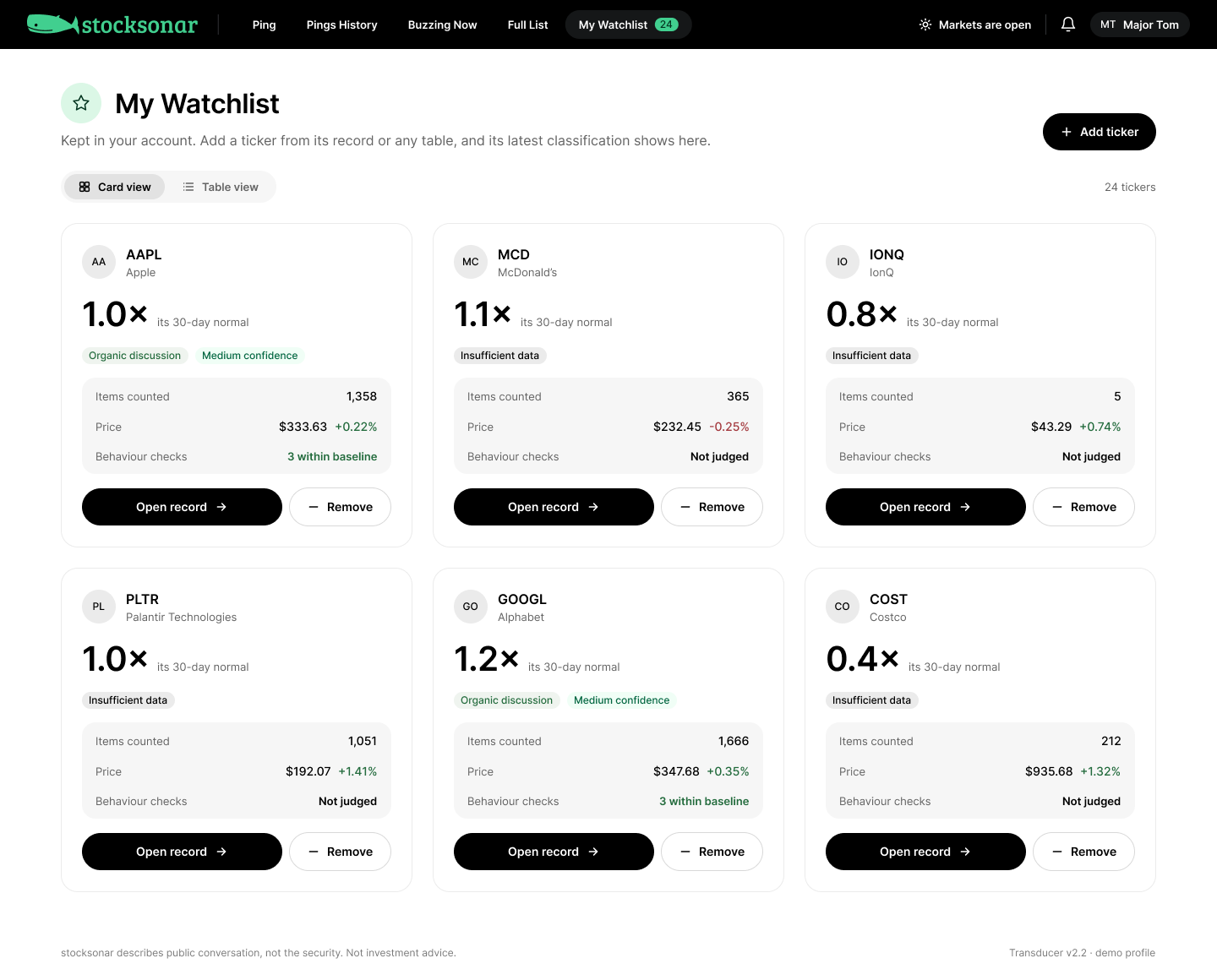
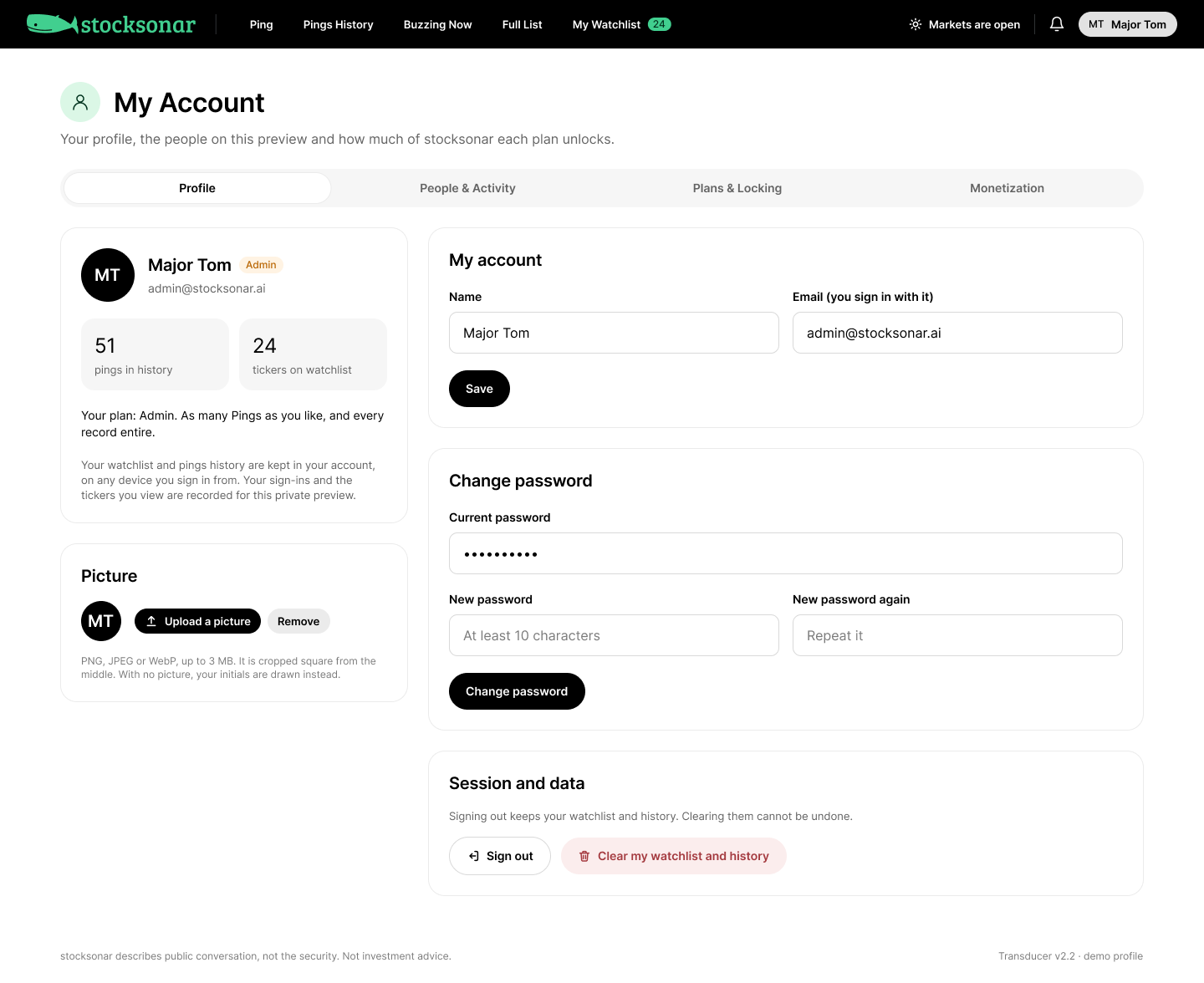
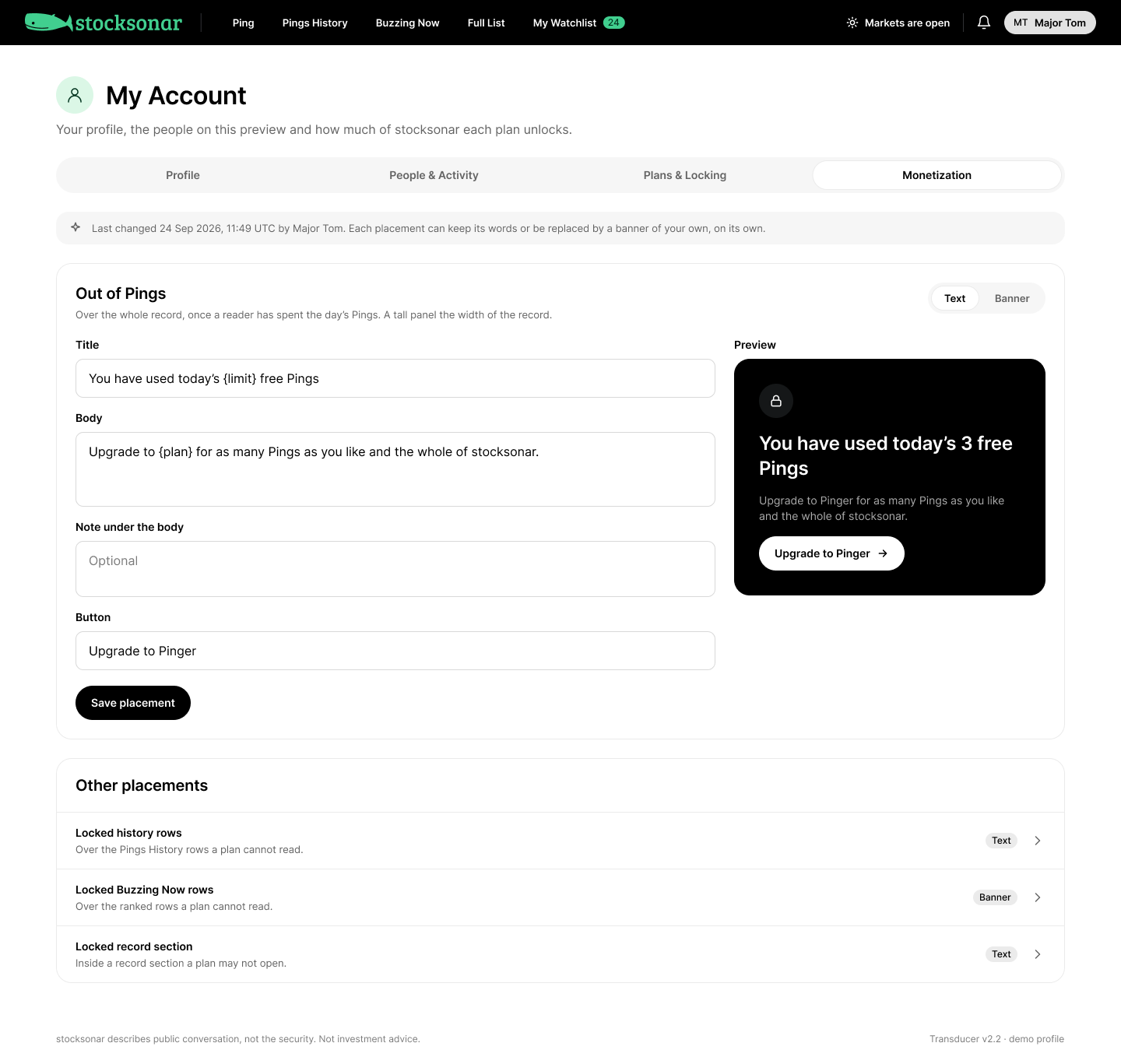
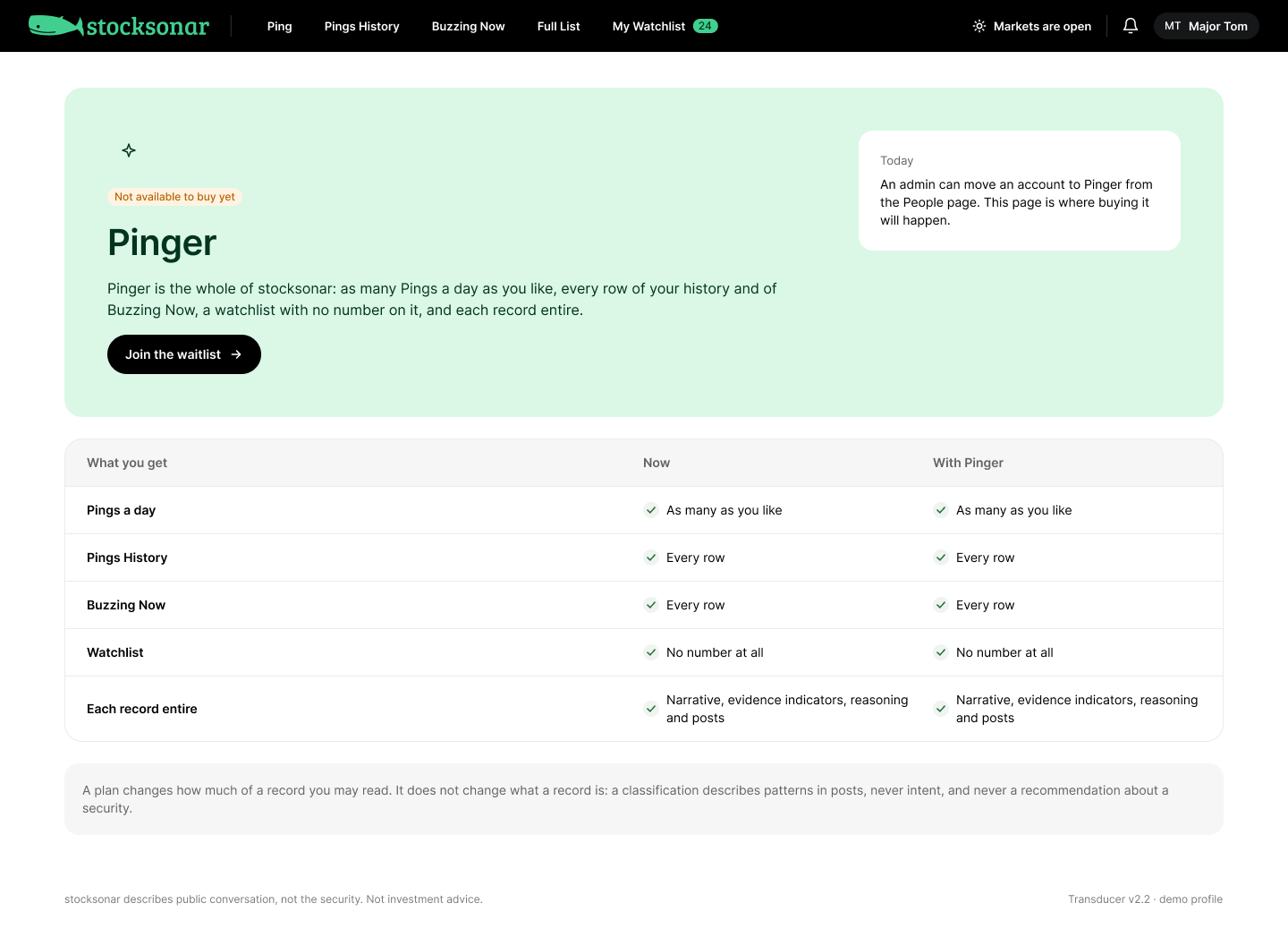
The product is built around one action: Ping a ticker. Everything else supports it. Pings History keeps what you checked, Buzzing Now ranks tickers by how far each sits above its own normal, the Full List shows the whole universe, My Watchlist tracks the tickers you follow, and My Account holds profile, plans and monetization.
Moving into Design
Brand & Marketing
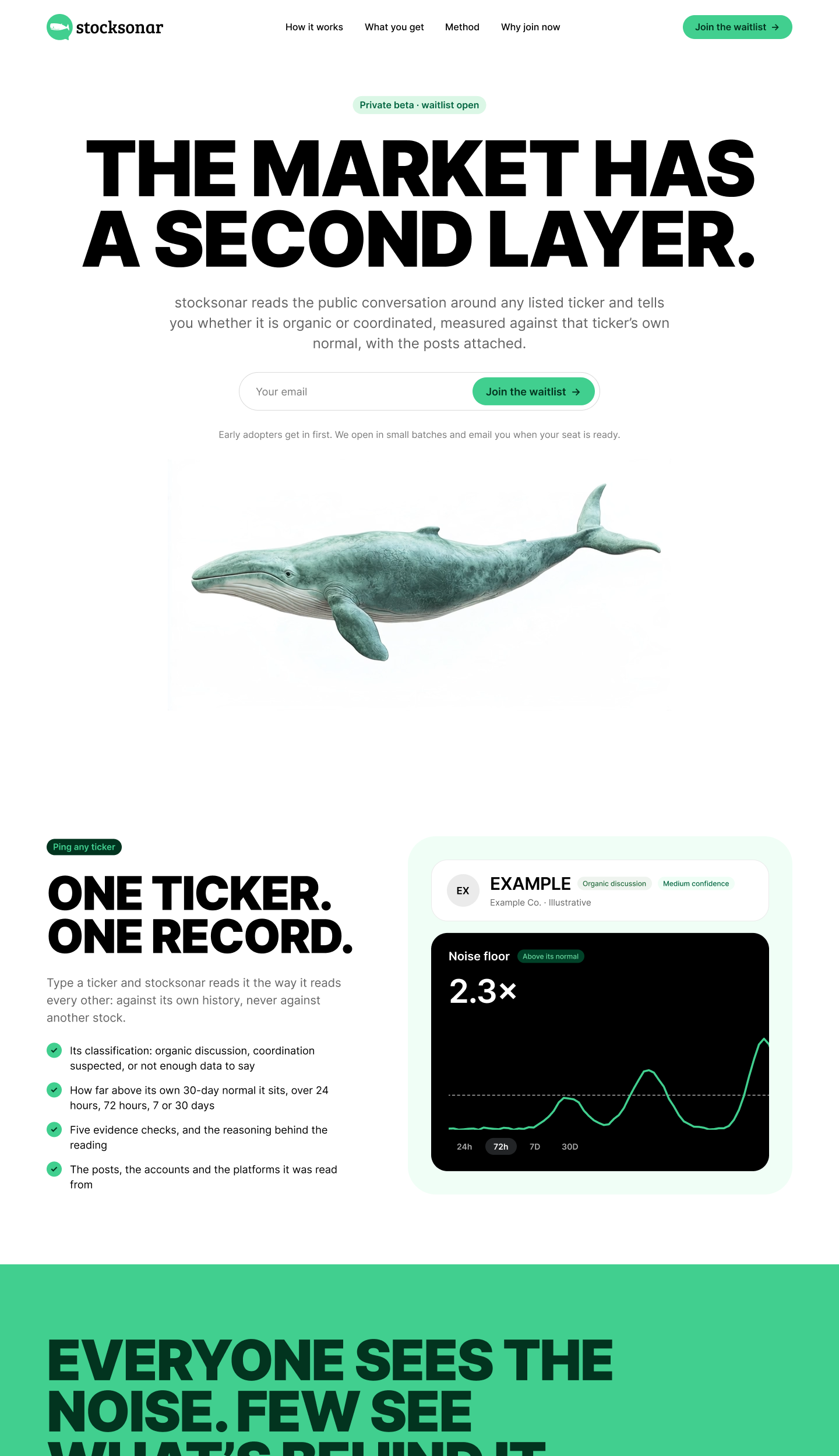
The brand had to avoid two traps: looking like a trading terminal, and sounding like an accusation. The identity is light-first, built on a fresh brand green and a calm whale mascot, with no radar sweeps or green phosphor. The language is locked to three observational labels — Organic discussion, Coordination suspected and Insufficient data — and never calls anything “manipulation”.

Go-to-Market Strategy
To build demand before launch, I set up a multi-channel waitlist approach that included:
- A waitlist landing page with a live Ping demo
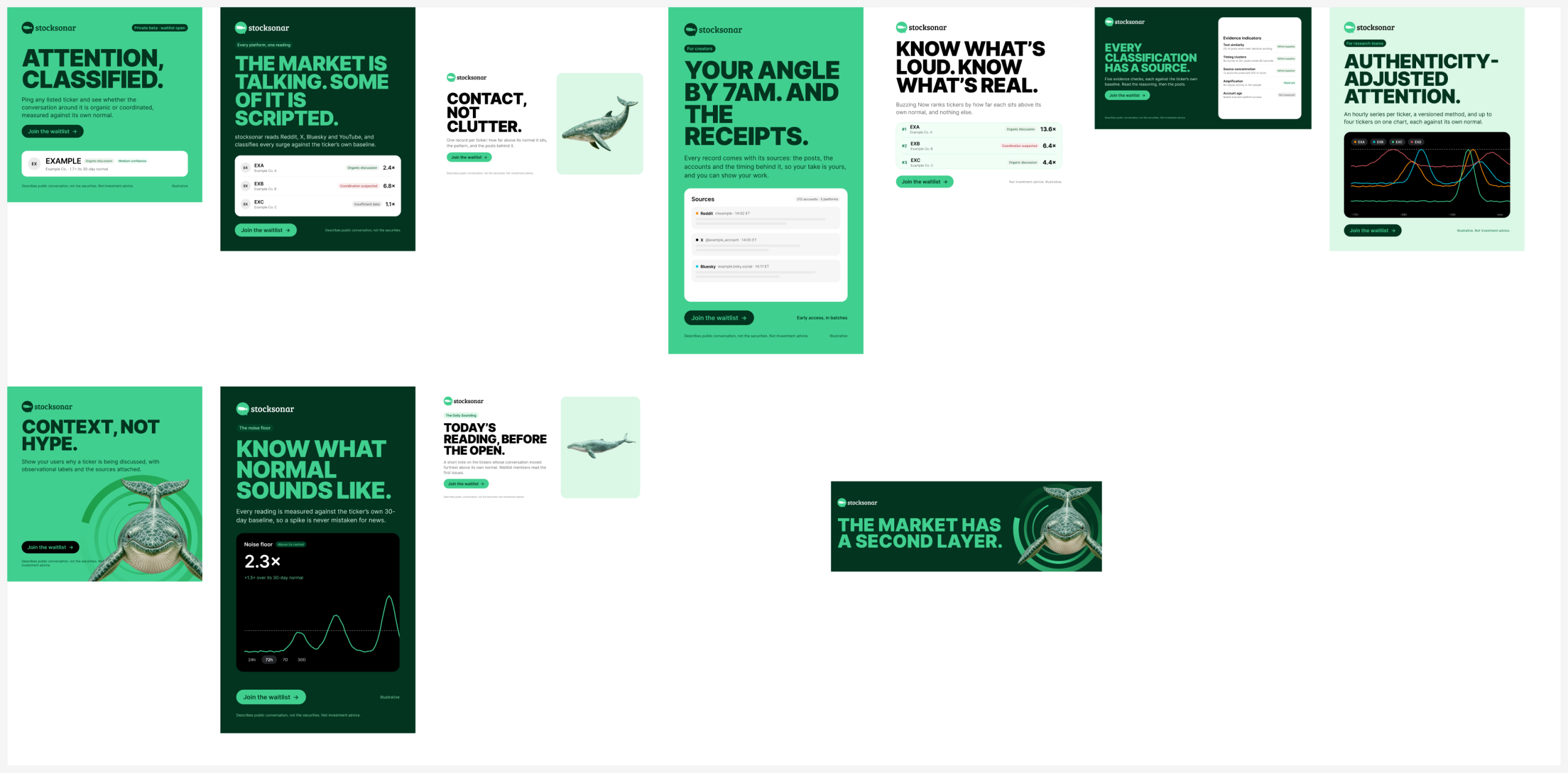
- A set of ten social ads, each targeting creators, research teams or platforms
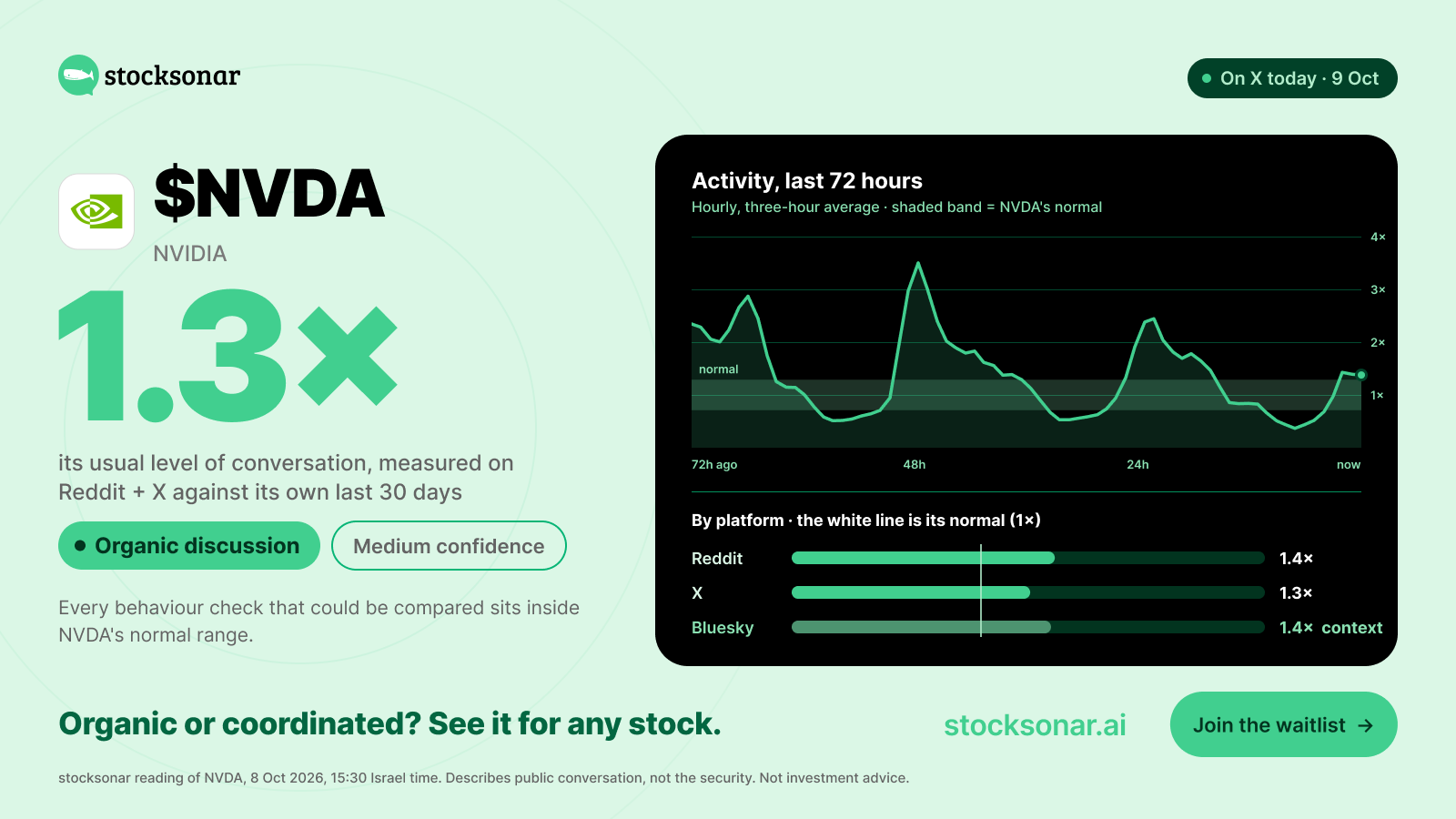
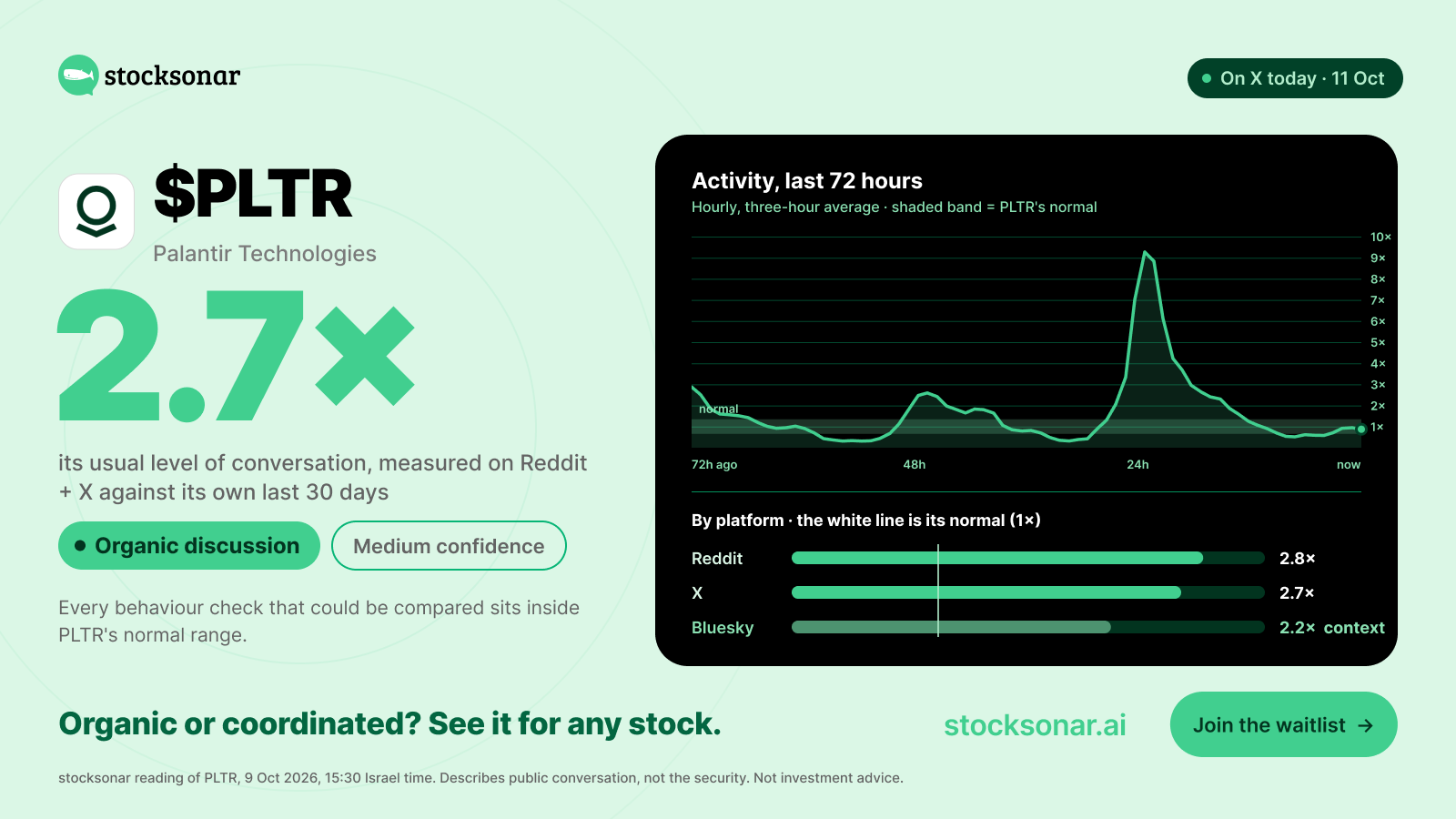
- Daily X posts on @stocksonarai, generated by an automated skill for the day’s ticker
- A free-forever subscription offer for creators who partner with us at launch
The goal was to reach finance and stock-market creators — the audience my initial research pointed to — and show them the product in action rather than describe it.
Launch Video
Where It Stands
stocksonar is in demo stage. The classification engine, the discovery sweep and the Ping experience are built, and a public demo is live. The focus right now is growing the waitlist and opening partnerships with creators.
6
Equity Subreddits Read
~470
Symbols Named per Day
30 Days
Baseline per Ticker
3
Classification Labels
Running the engine on real data validated the direction and made the hard problems clear: data access and coverage differ by platform, and an honest engine has to say “Insufficient data” far more often than a hype-driven one would. That restraint is the point — it is what makes a classification safe to cite.
Next Steps
Next, we plan to secure full data access across platforms, starting with Reddit, run the collector always-on through a 30-day accumulation period, and freeze the method only once its quality gates pass on production data.
On the product side, we will open the first waitlist batch, launch the free weekly issue, and onboard the first creator partners. Our goal is to make stocksonar the place creators check before they share a story about a stock.
